

How to Stay Safe in South Africa

On the second Wednesday of the month, Kristin Addis from Be My Travel Muse writes a guest column featuring tips and advice on solo female travel. It’s an important topic I can’t adequately cover, so I brought in an expert to share her advice. This month her column is on safety in South Africa.
At the dinner table back home in California, I asked
my friends to name the first thing that came to their minds when they
thought about South Africa. I expected them to say things like
“elephants!” and “Lion King!” but instead “Ebola,” “soccer,” and “crime”
were among the responses I got. When I told them that I would be
traveling there by myself, they were horrified at the thought.
This
is proof to me that much is misunderstood — or at the very least
generalized and oversimplified — about this country, which has a lot
more going for it than some misplaced Ebola rumors and a World Cup that
took place a few years ago. South Africa is huge and diverse, spanning
471,000 square miles, with a population of over 53 million and eleven
official languages.
Why South Africa gets a bad rap

South Africa is the first country where the locals have repeatedly told me that muggings and violent crime are a big problem and, according to most I’ve spoken with, on the rise. It seemed to me that South Africans were among the first to caution me about the dangers traveling around the country.
According to this post
by the BBC, the rate of violent crime is the ninth highest in the
world, and incidence of rape is the highest in the world. And in a 2012
study by the United Nations Office on Drugs and Crime, South Africa had an annual intentional homicide rate of 30 deaths per 100,000 inhabitants.
While
this may seem high, it’s lower than Detroit (54), Honduras (92), and
Belize (44). Moreover, the homicide rate has gone down since apartheid
ended, and there have been no murders in Cape Town’s five safest
neighborhoods, where tourists tend to flock. It’s not a war zone — most
violent crime takes places between people who know each other in
dangerous neighborhoods that tourists don’t tend to visit. Tourists in
South Africa are the targets mainly of petty crime.
The
country’s history — apartheid’s forced racial separation followed by
its abolition and the subsequent movement toward reconciliation
spearheaded by former President Nelson Mandela — lends a bit of
understanding to where the country is today. Though still rife with
political, economic, and racial struggles, South Africa is not as scary
and dangerous as it is often perceived.
Staying safe
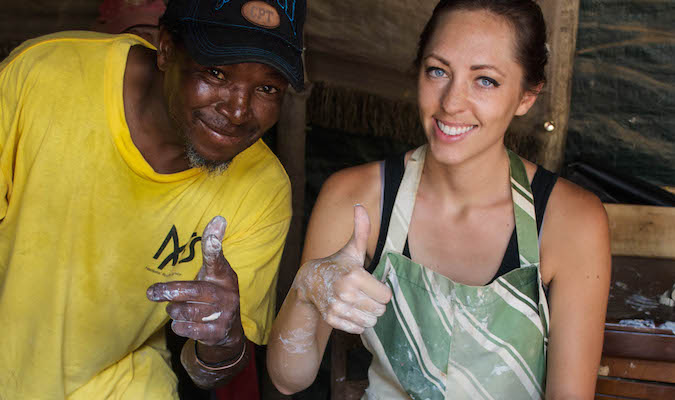
After spending nine weeks solo traveling through the country, I did find that I had to take more precautions than I do in Southeast Asia or Germany, but the dangers are not all that different from the big cities back home in the United States or other parts of Europe.
While much of staying safe means following the safety rules you obey back home and following your intuition, the following are some tips to make your visit to South Africa more likely to be hassle-free.
Know where not to go
Though
crime rates are higher in the townships, which are settlements
established during apartheid for forced racial segregation, staying safe
does not mean staying out of them altogether. Some of my favorite
memories, such as drinks shared around an unlicensed bar, little kids
swinging from my arms, and delicious streetside BBQ, all came from my
time spent in the townships.
They’re friendly places. They’re just
better visited during daylight hours and with a local guide who lives
there and knows the lay of the land. This can be organized through your
guesthouse or by seeking information from the tourism board. Soweto in
Johannesburg, for example, has everything from biking to bus tours and welcomes tourists thanks to the benefits of the money they bring in.
Don’t walk at night
People tend to become targets by walking in cities rather than taking private or public transportation.
Even in a group, pickpocketing can occur, but it’s much more likely to
happen when walking alone. Avoid walking alone when possible, especially
at night.
Don’t be flashy
Wearing jewelry and designer
clothing and taking your phone out when out and about are all great ways
to become a target. Bringing expensive jewelry on vacation is not
advisable in the first place, but if you do have pricey things like a
camera, keep them hidden. And never keep your passport on you.
The
more likely it seems that you’re a foreigner who does not know the lay
of the land, the more likely you are to become a target for petty theft.
Put the phone away and take it out when safely at home or in a café.
Lock your car doors and keep valuables hidden
Other common occurrences, especially in big cities like Cape Town and Johannesburg, are car break-ins and carjackings.
Avoid
these by keeping the doors locked while driving and keeping absolutely
everything — sunglasses, phones, bags, and wallets — out of sight.
Nothing of value or anything that seems like it could possibly be
valuable, including cheap sunglasses, should be visible when the car is
parked and unattended.
In the big cities, unlicensed parking
attendants are always around to “watch” your car for you, so throw them a
tip now and then for keeping an eye out for your car when you’re not
around.
Have a dummy wallet
Though I believe I stayed safe
mostly because I didn’t walk around much, there were a few times when I
got tired of being scared and walked short distances instead of taking a
taxi or a bus. To protect my belongings, I carried a “dummy wallet”
that had just a few canceled credit cards and a bit of petty cash in it,
while I hid everything else in my shoe or, honestly, in my bra.
If
anyone approached me, I planned to freely hand over my bag so that the
thief had something to take while the rest was safely hidden. It never
came down to this, as I never experienced any crime first-hand, but I
felt ready should a thief approach.
Be aware and listen to your instincts
It
also helps to be hyper-aware. If you must walk, take in your
surroundings, look in every direction, make a point of letting everyone
know that you’re paying attention by keeping your head up and looking
alert. Try never to be alone on a sidewalk, and get as close to families
as possible.
I once walked down a quiet side street in the
up-and-coming Woodstock area of Cape Town and, realizing nobody was
around, immediately turned around and went back to the busy main road.
It felt sketchy, and my alarm bells sounded.
If someone appeared
to be paying me too much attention, I’d look that person in the eye and
say “hello” or step into a store with other people inside.
Use universal common sense
I
thought about my safety precautions in South Africa compared to what I
would do at home. I certainly wouldn’t walk around most parts of Los
Angeles or other major American cities alone and wouldn’t even consider
it at night, particularly not with my phone out. I guard my bag like a
hound in most major European cities due to the incredibly high
pickpocketing rates. It really wasn’t so different in South Africa.

It’s
very easy to travel safe in South Africa. You just need to take more
precautions than you would in, say, Germany or Thailand.
It used
to be that I couldn’t answer the question when asked about my favorite
country I’ve been to. Now I reply “South Africa.” Though statistics can
make it seem like a scary place, in reality I spent much more time enjoying myself
than ever worrying about being robbed or becoming a victim of violent
crime. While safety should always be foremost in your mind, South Africa
did not feel scary, uncomfortable, or dangerous.


Post a Comment